

- Building Core Strength with Pilates Ball Exercises: A Progressive Approach
- Pilates Ball Integration: Designing a Complete Core Workout Routine
- Common Pilates Ball Mistakes and How to Avoid Them for Optimal Results
- Frequently Asked Questions
Understanding Pilates Balls: Benefits, Types, and Core Principles
Pilates balls, also known as small stability balls or Pilates spheres, are versatile tools that have become increasingly popular in fitness routines. These inflatable balls offer a unique way to enhance strength, balance, and core stability. They come in various sizes and densities, catering to different fitness levels and exercise goals. Understanding their benefits, the different types available, and the fundamental principles of their use is key to maximizing their effectiveness.
Benefits of Using Pilates Balls
Incorporating Pilates balls into a workout routine delivers a range of physical advantages. Primarily, they challenge your core muscles. The unstable surface forces your body to engage deeper abdominal, back, and pelvic floor muscles to maintain equilibrium during exercises. This increased core activation contributes to improved posture and reduced risk of lower back pain.
Beyond core strength, Pilates balls enhance balance and proprioception. Proprioception is your body’s awareness of its position in space. The dynamic nature of exercises on a ball requires constant adjustments, refining this sense and potentially reducing the likelihood of falls, especially as individuals age. A study published in the Journal of Sport & Rehabilitation found that incorporating unstable exercises, like those involving balls, improved balance in older adults.
Furthermore, Pilates balls can make exercises more challenging and engaging. They introduce an element of instability that increases the workload on stabilizing muscles. This can lead to greater muscle activation and improved functional strength – the ability to use strength in everyday activities. For example, performing a squat on a ball requires more effort than a traditional squat because the ball’s surface shifts underfoot.
Types of Pilates Balls
Pilates balls are available in several sizes and materials, each serving slightly different purposes. The most common types include:
- Small Stability Balls (4-6 inches): These are the most frequently used type. Their smaller size makes them ideal for exercises targeting smaller muscle groups and for beginners learning to control their balance. They are often used for arm and leg exercises, core work, and stretches.
- Large Stability Balls (16-18 inches): Often referred to as exercise balls or yoga balls, these are typically used for larger muscle groups and exercises involving full-body movement. They are excellent for core engagement during exercises like planks and crunches.
- Weighted Pilates Balls: These balls offer added resistance, making exercises more challenging and effective for building strength. The added weight can be particularly beneficial for those who have progressed in their fitness journey.
The material of the ball can also vary. Most are made from durable PVC, but some are constructed from softer materials like silicone. The choice of material often depends on personal preference and the intended use.
Core Principles for Using Pilates Balls
To effectively and safely utilize Pilates balls, understanding a few core principles is essential.
- Maintain Core Engagement: Throughout every exercise, consciously engage your core muscles. This means drawing your navel towards your spine and keeping your abdominal muscles firm. This fundamental principle ensures stability and prevents injury.
- Focus on Balance: The instability of the ball is a key feature. Practice slow, controlled movements and focus on maintaining your balance throughout each exercise. Don’t rush the movements; precision is more important than speed.
- Proper Alignment: Maintaining proper body alignment is crucial to maximize the benefits and avoid strain. Ensure your body forms a straight line from head to heels as much as possible during exercises.
- Start Slowly: Beginners should start with simpler exercises and gradually progress to more challenging ones as their strength and balance improve. It’s important to listen to your body and avoid pushing beyond your current capabilities.
- Safe Environment: Always use a Pilates ball on a stable, non-slip surface. Ensure there is ample space around you to prevent accidental bumps or falls.
Pilates balls provide a dynamic and effective way to enhance fitness. By understanding their benefits, the different types available, and the fundamental principles of their use, individuals can unlock a new dimension of strength, balance, and core stability in their workout routines.
Pilates Ball Basics: Proper Form and Fundamental Exercises for Beginners
The Pilates ball, also known as a small exercise ball or fit ball, is a versatile tool for enhancing Pilates practice and overall fitness. It introduces instability, challenging core muscles and improving balance, coordination, and flexibility. For beginners, understanding proper form and starting with fundamental exercises is crucial for maximizing benefits and preventing injury.
Understanding the Pilates Ball
The ball’s size typically ranges from 30 to 50 centimeters. Choosing the right size depends on the individual’s height. Generally, shorter individuals benefit from a smaller ball, while taller individuals require larger ones. Proper inflation is also key; the ball should be firm but not overly rigid. This allows for appropriate support and challenge during exercises.
Essential Form Principles
Before diving into exercises, establishing foundational form is paramount. Maintaining a neutral spine is crucial throughout all Pilates ball work. This means avoiding excessive arching or rounding of the back. Engage the core muscles – the abdominals, back muscles, and pelvic floor – to stabilize the torso. Focus on controlled movements; avoid jerky or rushed motions. Breathing deeply and rhythmically also plays a significant role, coordinating movement with exhales during exertion and inhales during relaxation.
Fundamental Exercises for Beginners
Here are some foundational exercises to get started with the Pilates ball:
- Ball Squeeze: Lie on your back with knees bent and feet flat on the floor. Place the ball between your knees. Gently squeeze the ball, engaging the inner thigh muscles. Hold for a few seconds and release. This exercise improves hip stability and strengthens the abductors.
- Ball Roll-Over: Start in a bridge position with your upper back supported by the ball. Gently roll backward onto your upper back, then roll back up to the bridge position. This exercise builds core strength and improves spinal mobility. It’s important to control the movement throughout.
- Ball Pass: Sit with knees bent and feet flat on the floor, holding the ball with both hands. Pass the ball from hand to hand, reaching forward and then backward. This exercise enhances coordination and arm strength. Keep your core engaged to maintain stability.
- Single Leg Balance: Stand with feet hip-width apart and place the ball on the floor between your feet. Gently lift one foot onto the ball, maintaining balance. Hold for as long as comfortable, gradually increasing the duration. This exercise significantly improves balance and strengthens the leg muscles.
- Plank on Ball (Modified): Begin in a plank position with forearms on the ball. Ensure your body forms a straight line from head to heels, engaging your core to prevent sagging. This is a more challenging variation of the traditional plank. Start with short holds and gradually increase the time as strength improves.
Progression and Safety
As strength and control improve, beginners can progress to more challenging exercises. This might involve incorporating leg lifts, hip extensions, or using the ball in combination with other Pilates equipment. Listen to your body and avoid pushing through pain. If any exercise causes discomfort, modify it or consult with a qualified Pilates instructor. Consistent practice, focusing on proper form, is key to reaping the benefits of Pilates ball exercises.
Building Core Strength with Pilates Ball Exercises: A Progressive Approach
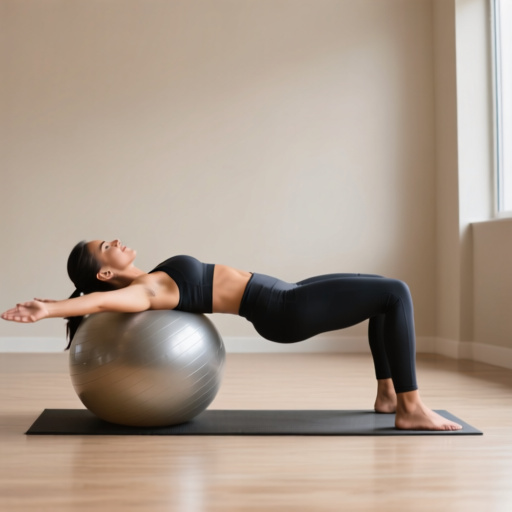
The Pilates ball, also known as a Swiss ball or stability ball, offers a versatile tool for enhancing core strength. Its inherent instability challenges your body to engage deeper stabilizing muscles compared to traditional floor exercises. A progressive approach to incorporating the Pilates ball into a fitness routine ensures safety and maximizes results. This involves starting with foundational exercises and gradually increasing difficulty as strength and control improve.
Foundation: Mastering Basic Stability
Before attempting more complex movements, it’s crucial to establish a solid foundation of stability. Simple exercises help build the necessary muscle activation patterns. Begin with exercises focusing on maintaining balance on the ball. A basic starting point is simply holding a roll-up while maintaining a stable core. This requires controlled movement and prevents excessive arching of the lower back. Another excellent initial exercise is the single-leg balance, where you lift one leg off the ground and maintain equilibrium. This targets the smaller stabilizing muscles in the hips and core. These fundamental movements build proprioception – your body’s awareness of its position in space – which is vital for more advanced ball exercises.
Progressing Core Engagement
Once comfortable with basic stability, the focus shifts to exercises that actively engage the core muscles. The Pilates roll-out is a classic exercise that progressively challenges abdominal strength. Starting in a kneeling position, you slowly roll the ball forward, extending your torso while maintaining a straight back. Control the movement throughout the entire range of motion and roll back to the starting position. This requires significant engagement of the rectus abdominis, obliques, and transverse abdominis. Another effective exercise is the hundreds performed while balancing on the ball. This dynamic exercise involves lifting your legs and arms and pumping them in a coordinated motion while maintaining a stable core. Focus on controlled, small movements rather than large, swinging ones.
Introducing Movement and Challenge
As strength increases, introduce exercises that incorporate movement. The criss-cross performed on the ball is a great way to target the obliques. Lie on your back with your knees bent and feet flat on the floor. Gently tilt the ball forward and curl your upper body towards your knees, alternating sides. This exercise not only strengthens the obliques but also improves rotational stability. For a more challenging variation, try performing leg presses with your feet on the ball. This requires significant core and leg strength to maintain balance and control the movement. The ball’s instability forces the core to work harder to prevent rotation and maintain a stable posture.
Integrating into a Routine: A Sample Progression
A sample progression for incorporating the Pilates ball into a routine could look like this:
- Week 1-2: Focus on basic stability exercises like roll-ups and single-leg balances for 2-3 sets of 10-15 repetitions.
- Week 3-4: Introduce core engagement exercises like hundreds and modified roll-outs (only partial roll-outs) for 2-3 sets of 10-12 repetitions.
- Week 5-6: Incorporate movement exercises such as criss-cross and leg presses, performing 2-3 sets of 10-12 repetitions on each side.
- Ongoing: Continue to increase repetitions, sets, or the difficulty of exercises as strength improves. Consider adding variations to challenge the core in different planes of motion.
Important Considerations
Prioritize proper form over the number of repetitions. Incorrect form can lead to injury. It’s advisable to start with a lower rebounder or a firmer ball if you are new to Pilates ball exercises. Listen to your body and stop if you experience any pain. Gradually increasing the time spent on the ball is also important, especially when starting. Consulting with a qualified Pilates instructor can provide personalized guidance and ensure proper technique. The Pilates ball provides a dynamic and effective way to build a strong and stable core, contributing to improved posture, balance, and overall functional fitness.
Pilates Ball for Stability: Enhancing Balance and Proprioception
The Pilates ball, also known as a small stability ball or Swiss ball, is a versatile tool often overlooked in fitness routines. While commonly associated with core strength, its benefits extend significantly to improving balance and proprioception, the body’s awareness of its position in space. Incorporating the Pilates ball into workouts can lead to enhanced stability, reduced risk of injuries, and improved overall body control.
Understanding Balance and Proprioception
Balance isn’t simply about standing upright. It’s a complex interplay of several systems working together – the visual, vestibular (inner ear), and proprioceptive systems. Proprioception, in particular, plays a critical role. It’s the unconscious perception of body position and movement. Sensory receptors in muscles, tendons, and joints send information to the brain, allowing for adjustments to maintain equilibrium. Weakness in proprioception can manifest as clumsiness, difficulty with coordination, and an increased likelihood of falls. Improving proprioception through exercises like those involving the Pilates ball can significantly enhance functional movement.
How the Pilates Ball Challenges Balance
The inherent instability of the Pilates ball forces the body to engage more muscles to maintain equilibrium. Unlike performing exercises on a stable surface, the constantly shifting base of support requires continuous micro-adjustments. This constant challenge strengthens the muscles responsible for stabilization, including those in the core, legs, and hips. Think of it like this: standing on a slightly uneven surface engages more muscles than standing on perfectly level ground. The Pilates ball amplifies this effect, creating a more potent training stimulus.
Practical Exercises for Balance and Proprioception
Several exercises effectively utilize the Pilates ball to improve balance and proprioception. Here are a few examples:
- Single-Leg Balance: Stand with one foot on the ball and the other foot planted on the ground. Focus on maintaining balance for as long as possible. This simple exercise drastically improves proprioceptive feedback in the ankle and supporting leg.
- Ball Pass: With a partner, gently toss a ball back and forth while standing on the Pilates ball. This requires dynamic balance and coordinated movement, challenging both static and dynamic proprioception.
- Hip Bridges on the Ball: Lie on your back with your heels resting on the ball and your feet flat on the floor. Lift your hips off the ground, squeezing your glutes. This strengthens the posterior chain while demanding stability from the core and hips.
- Plank with Feet on the Ball: Perform a plank position with your feet balanced on the Pilates ball. This is an advanced exercise that significantly elevates the challenge to core stability and proprioception. Maintaining a straight line from head to heels requires significant muscle activation and refined body awareness.
- Standing Leg Swings: Holding onto a chair for support if needed, stand on the ball and perform controlled leg swings forward, backward, and sideways. This helps improve balance and range of motion in the hips and strengthens stabilizing muscles.
Integrating the Pilates Ball into Your Routine
The beauty of the Pilates ball lies in its adaptability. It can be integrated into a wide range of exercises, from basic mat work to more advanced strength training. Start with simple exercises and gradually increase the difficulty as your balance and strength improve. Beginners might benefit from using a lower inflation level to provide more stability. As proficiency grows, a higher inflation can intensify the challenge.
Important Considerations:
- Safety First: Ensure you have adequate space around you to avoid collisions.
- Proper Inflation: Inflate the ball to a height that provides a challenging but manageable level of instability.
- Listen to Your Body: If you experience any pain, stop the exercise immediately.
- Progression: As balance improves, gradually increase the complexity of the exercises.
By incorporating the Pilates ball strategically, individuals can significantly enhance their balance and proprioception, leading to improved athletic performance, reduced injury risk, and greater functional movement in everyday life. This simple yet effective tool offers a powerful way to cultivate a stronger connection between mind and body.
Advanced Pilates Ball Techniques: Incorporating Challenges and Variations
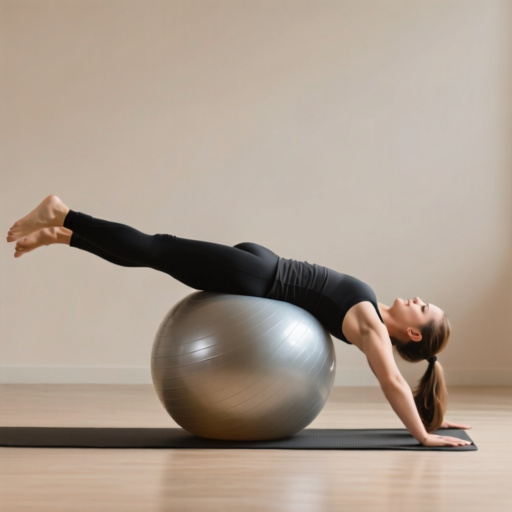
The Pilates ball, also known as a small stability ball or Pilates sphere, offers a dynamic way to elevate core engagement and challenge stability. While basic exercises are beneficial, incorporating advanced techniques can significantly enhance fitness and functionality. This section explores various challenges and variations to take your Pilates ball practice to the next level.
Increasing Difficulty Through Unstable Bases
One way to amplify the workout is by performing exercises on an unstable surface. Instead of standing with feet flat on the floor, try placing one or both feet on a balance cushion or a slightly uneven surface. This forces your body to engage deeper stabilizing muscles to maintain balance. For instance, a standard Pilates press-up can become considerably more challenging when performed with feet on a balance pad. This variation not only strengthens the core but also improves proprioception – your body’s awareness of its position in space.
Consider a single-leg press-up. This exercise, already requiring significant strength, becomes exponentially harder when executed on an unstable base. The subtle shifts in your supporting foot demand constant micro-adjustments from your core and stabilizing muscles, leading to improved balance and control. This type of challenge mirrors real-life scenarios, making the benefits transferable to everyday movements.
Ball-Based Reaches and Rotations
The Pilates ball lends itself exceptionally well to exercises that challenge range of motion and rotational control. Exercises like the ball trunk rotation become more demanding with added resistance or by increasing the distance of the reach. A variation involves holding a light weight during the rotation, further intensifying the core engagement. Another advanced technique is the side-lying ball reach. Starting in a side-lying position with knees bent and the ball between the knees, reach the top arm overhead, maintaining a stable torso. This strengthens the obliques and improves lateral stability.
Furthermore, the ball can be used to facilitate dynamic stretches. For example, rolling the ball from the feet up the legs allows for a deeper stretch of the hip flexors and lower back. This dynamic movement enhances flexibility while also promoting circulation.
Integrating the Ball with Other Pilates Equipment
The Pilates ball isn’t designed to exist in isolation. Integrating it with other Pilates equipment, such as the reformer or Cadillac, can create synergistic effects. For instance, performing leg circles on the ball while utilizing the resistance of a reformer carriage further intensifies the workout. This combination challenges both strength and stability simultaneously.
Another compelling integration is using the ball as a prop during rolling exercises on the Cadillac. The ball provides added instability, forcing the user to actively engage their core to control the movement. This improves coordination and strengthens the deep core muscles.
Advanced Core Challenges
The core is the foundation of all Pilates exercises, and the ball offers unique opportunities for advanced core work. Exercises like the Teaser become significantly more challenging when performed with a slight forward lean, requiring exceptional core strength and control. Another advanced variation is the “Star Stretch” on the ball, where the legs and arms extend outwards while maintaining a stable core. This tests the core’s ability to resist flexion, extension, and rotation. Proper form is crucial for these advanced exercises; focusing on controlled movements and maintaining a neutral spine are essential to prevent injury.
Proprioceptive Enhancements and Functional Movement
Beyond strength building, the Pilates ball enhances proprioception. The constantly shifting surface forces the body to recalibrate balance and spatial awareness. This type of training is valuable for athletes and individuals recovering from injuries, as it helps to improve coordination and prevent re-injury. The ball’s inherent instability compels the neuromuscular system to work harder, promoting better muscle activation and control. This is particularly beneficial for improving functional movement patterns, translating to improved performance in everyday activities.
It’s important to note that these advanced techniques require a solid foundation in basic Pilates principles. Beginners should master fundamental exercises before attempting more challenging variations. Consulting with a qualified Pilates instructor is highly recommended to ensure proper form and avoid injury.
Pilates Ball Integration: Designing a Complete Core Workout Routine
The Pilates ball, also known as a small stability ball or Newton ball, offers a dynamic way to elevate core workouts. This versatile prop introduces instability, forcing the core muscles to work harder to maintain balance and control. Integrating the Pilates ball into a routine provides a more challenging and engaging approach to strengthening the deep abdominal muscles, obliques, and lower back—the foundation of a strong core.
A complete core workout incorporating the Pilates ball should target all aspects of core strength: stability, flexion, extension, and rotation. Begin with foundational exercises to build a solid base. A simple starting point is the Pilates ball roll-out. In this exercise, the individual starts on their knees with the ball positioned in front. They slowly roll the ball forward, extending their torso while maintaining a flat back and engaging the core. The controlled return to the starting position completes one repetition. This exercise effectively challenges core endurance and stability.
Next, incorporate exercises that emphasize abdominal flexion. The Pilates ball crunches are a modified version of the traditional crunch. Lying on your back with your feet supported on the ball, hands behind your head (avoid pulling on the neck), lift your upper body towards your knees, focusing on contracting the abdominal muscles. The ball introduces an element of instability, requiring greater core engagement than floor crunches. A variation involves holding a small weight to increase the intensity.
To target oblique muscles, the Pilates ball side bends are highly effective. Starting in a seated position with the ball between the knees, gently lean to one side, keeping the back straight and engaging the obliques to control the movement. Repeat on the other side. Focus on feeling the contraction in the side abdominal muscles. This exercise not only strengthens the obliques but also improves lateral stability.
Exercises focusing on core rotation can be achieved with the Pilates ball Russian twists. Sit with your feet elevated on the ball, leaning back slightly to engage the core. Hold a weight (optional) and twist your torso from side to side, touching the ball to the floor beside each hip. The instability of the ball amplifies the core engagement needed for rotation, leading to improved power and control.
Beyond these core exercises, the Pilates ball can also enhance other movements. Adding a Pilates ball to planks – by placing the forearms or hands on the ball – significantly increases the challenge, demanding heightened core stability to prevent wobbling. Similarly, performing leg raises or hip thrusts with the lower back supported on the ball adds another layer of complexity and strengthens the entire posterior chain, which works in synergy with the core.
Consider a routine incorporating these elements:
- Pilates Ball Roll-outs: 3 sets of 10-12 repetitions
- Pilates Ball Crunches: 3 sets of 15-20 repetitions
- Pilates Ball Side Bends: 3 sets of 15-20 repetitions per side
- Pilates Ball Russian Twists: 3 sets of 15-20 repetitions per side
- Ball Plank: Hold for 30-60 seconds, 3 repetitions.
This routine provides a comprehensive approach to core strengthening using the Pilates ball. Remember to consult with a healthcare professional or certified Pilates instructor before starting any new exercise program. Proper form is paramount to prevent injury and maximize the effectiveness of the exercises. The challenge offered by the Pilates ball encourages a deeper connection with the core muscles, leading to improved posture, balance, and overall functional fitness.
Common Pilates Ball Mistakes and How to Avoid Them for Optimal Results
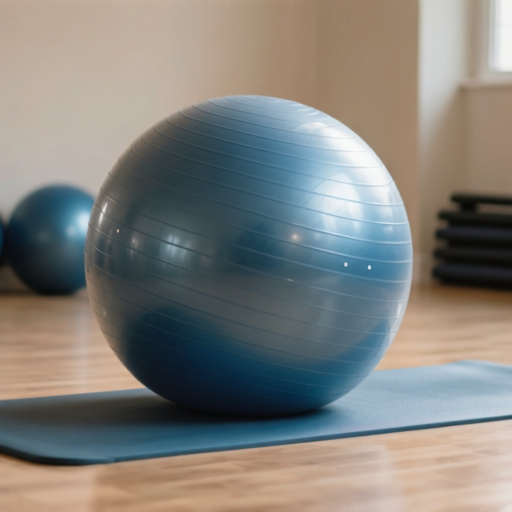
The Pilates ball, also known as a small stability ball or fit ball, is a versatile tool for enhancing core strength, stability, and flexibility. Many individuals new to Pilates or using the ball for the first time may inadvertently make certain mistakes that hinder their progress or even increase the risk of injury. Understanding these common pitfalls and learning how to avoid them is crucial for reaping the full benefits of this effective exercise prop.
One frequent error is poor posture. Many individuals will slump or round their backs while performing exercises on the ball. This can compromise the effectiveness of the exercise and put unnecessary strain on the spine. A key element of proper form is maintaining a neutral spine – think of a straight line from your ear, through your shoulder, hip, and knee. Engaging the core muscles helps to stabilize the torso and support this posture. Regularly checking in with your alignment throughout each exercise is essential.
Another common mistake involves excessive momentum. The ball’s inherent instability can tempt individuals to rely on swinging or jerky movements rather than controlled muscle engagement. This not only reduces the effectiveness of the exercise but can also increase the likelihood of losing balance and potentially falling. Focus on slow, deliberate movements, concentrating on the targeted muscles working throughout the entire range of motion. Think of each repetition as a mindful and controlled action, rather than a quick, forceful one.
Furthermore, incorrect ball sizing can significantly impact exercise effectiveness and safety. Using a ball that is too large or too small can alter the intended muscle engagement and increase the risk of injury. Generally, the size of the ball should correspond to the user’s height. A good rule of thumb is to sit on the ball with your feet flat on the floor, and your knees should be bent at a 90-degree angle. If your knees are higher than your hips, the ball is too large. If your hips are higher than your knees, it’s too small. Consulting with a qualified Pilates instructor can help determine the appropriate ball size.
Adding resistance without proper form is another frequent oversight. While resistance bands or ankle weights can be incorporated with Pilates ball exercises, doing so while neglecting correct form can exacerbate postural issues and increase the risk of injury. Ensure the core remains engaged and the spine is aligned before adding any external resistance. Start with light resistance and gradually increase as strength improves.
Over-reliance on the ball for support is also a common issue. While the ball provides instability, it shouldn’t be used as a crutch to compensate for weak muscles. Exercises should challenge core stability and strength, not simply rely on the ball to prevent falls. Actively engage the muscles to maintain balance, rather than passively holding onto the ball for support.
Neglecting to breathe properly during Pilates ball exercises is a mistake that can limit their benefits. Pilates emphasizes the connection between breath and movement. Inhale deeply to prepare for the movement, and exhale during the exertion phase. Controlled breathing helps to stabilize the core and improve muscle engagement. A consistent breath rhythm throughout the exercise contributes significantly to optimal results.
Finally, rushing through repetitions can diminish the effectiveness of Pilates ball work. The slow, controlled movements are what engage the core muscles and promote stability. Aim for quality over quantity, focusing on performing each repetition with precision and control. This mindful approach maximizes the benefits of each exercise.
Frequently Asked Questions
- What are the benefits of using a Pilates ball?
Pilates balls strengthen your core muscles, improve balance and proprioception, and make exercises more challenging and engaging.
- What are the different types of Pilates balls?
Common types include small stability balls (4-6 inches), large exercise balls (16-18 inches), and weighted Pilates balls.
- Which Pilates ball size is best for beginners?
Small stability balls (4-6 inches) are generally recommended for beginners as they are easier to control and suitable for smaller muscle groups.


0 Comments