

- Progressing Your Workout: Advanced Resistance Band Arm Exercises for Increased Intensity
- Common Mistakes to Avoid in Pilates Resistance Band Arm Workouts and How to Fix Them
- Maximizing Your Results: Integrating Pilates Resistance Bands into a Comprehensive Fitness Program
- Frequently Asked Questions
Understanding Pilates Resistance Bands: What They Do, Why They Work, and How to Choose One
Pilates resistance bands offer a versatile and accessible way to enhance arm strength and overall Pilates practice. These inexpensive tools provide varying levels of resistance, allowing individuals to adapt exercises to their fitness level and progressively challenge their muscles. Understanding their benefits, different types, and proper usage is key to maximizing their potential.
The Advantages of Using Resistance Bands in Pilates
Incorporating resistance bands into Pilates routines presents numerous advantages. Primarily, they offer a portable and cost-effective way to increase the intensity of exercises. Unlike free weights, bands provide variable resistance throughout the range of motion. This means the tension increases as the band is stretched, challenging muscles more effectively during the entire movement. This progressive resistance can contribute to improved muscle activation and strength gains.
Furthermore, resistance bands can assist with joint stability and mobility. The elastic nature of the bands encourages controlled movements and helps to strengthen the small stabilizing muscles around joints. This is particularly beneficial for those recovering from injuries or looking to improve functional movement patterns. They also offer a gentler way to introduce resistance compared to heavier weights, making them suitable for beginners and individuals with limited mobility. For instance, a beginner performing bicep curls with a light band can build foundational strength before progressing to more challenging variations.
Exploring Different Types of Pilates Resistance Bands
Several types of resistance bands cater to various needs and exercise types. Identifying the differences helps users select the most appropriate band for their workout.
- Loop Bands (Mini Bands): These are short, circular bands that fit around the legs or wrists. They are excellent for adding resistance to leg exercises like hip abduction and lateral walks, as well as arm exercises like bicep curls and triceps extensions. Loop bands are generally lighter in resistance, making them ideal for warm-ups and lower-intensity exercises.
- TheraBand-Style Bands: These are longer, flat bands of varying thicknesses and resistance levels. They are suitable for a wider range of exercises, including arm rows, chest presses, and leg extensions. The resistance increases as the band is stretched, providing a more progressive challenge. TheraBand bands often feature numbered resistance levels, allowing for easy progression.
- Handle Bands: These bands come with handles attached, offering a more secure grip and control during exercises. They are beneficial for exercises requiring more stability, such as bicep curls, triceps extensions, and external rotations. Handle bands can be particularly helpful for individuals with wrist or grip issues.
- Chain Bands: These bands consist of several interconnected links, providing a unique resistance curve. They offer a different type of challenge compared to flat bands, engaging muscles in a slightly different way. Chain bands are often used for more advanced exercises.
Harnessing the Power: How to Effectively Use Resistance Bands
Using Pilates resistance bands correctly is crucial for achieving the desired results and preventing injuries. Here are some key considerations:
- Choose the Right Resistance: Select a band with appropriate resistance for your current strength level. Beginners should start with lighter bands and gradually progress to heavier ones as they get stronger.
- Proper Anchor Points: Ensure the band is securely anchored to a stable object or held firmly in your hands. Avoid anchoring bands to fragile surfaces.
- Controlled Movements: Focus on slow, controlled movements rather than quick, jerky motions. This maximizes muscle engagement and reduces the risk of strain.
- Maintain Proper Form: Pay attention to your posture and alignment throughout each exercise. Incorrect form can lead to ineffective workouts and potential injuries.
- Listen to Your Body: Stop immediately if you experience any pain. Discomfort is normal, but sharp or persistent pain is a sign to stop.
Resistance bands are a valuable addition to any Pilates routine. Their versatility, portability, and progressive resistance make them an excellent tool for boosting arm strength and enhancing overall fitness. By understanding the different types of bands and utilizing them correctly, individuals can unlock their full potential and achieve their Pilates goals.
Building a Foundation: Essential Pilates Exercises with Resistance Bands for Beginners
Pilates offers a fantastic way to strengthen the core and improve overall body control, and resistance bands add an effective layer of challenge for beginners. This section will introduce foundational Pilates exercises utilizing resistance bands, focusing on proper form and technique to build a solid base before progressing to more complex movements. Understanding the principles of Pilates and how resistance bands enhance them is key to a safe and beneficial workout.
Core Engagement: Banded Pilates Basics
Before diving into specific exercises, it’s important to understand the foundational principle of Pilates: core engagement. This involves gently drawing the navel towards the spine and maintaining a stable torso throughout each movement. Resistance bands amplify this engagement by providing an external force to work against, requiring muscles to actively stabilize and control motion.
A valuable starting point is the Hundred, adapted with a resistance band. Instead of just using the body’s resistance, a light band looped around the feet adds a gentle challenge to abdominal muscles. Lie on your back with knees bent and feet lifted. Hold the band in your feet. Curl your head and shoulder blades off the mat, extending your arms long. Pump your arms up and down while inhaling for five counts and exhaling for five counts. This exercise helps cultivate breath control and sustained core activation. Performing it with a band adds a subtle increase in the effort needed to maintain proper form.
Strengthening the Legs and Glutes
Resistance bands are particularly effective for targeting the lower body. Begin with simple exercises to establish proper movement patterns.
Banded Glute Bridges: Lie on your back with knees bent and feet flat on the floor, a resistance band placed just above your knees. Engage your glutes and lift your hips off the mat, squeezing your glutes at the top. Slowly lower back down. The band adds resistance throughout the movement, increasing the challenge to the gluteus maximus. Focus on maintaining a straight line from your shoulders to your knees. A study published in the Journal of Strength and Conditioning Research found that resistance band training can significantly increase gluteal muscle activation. This translates to improved hip extension power and stability.
Lateral Band Walks: Place a resistance band around your ankles or just above your knees. Stand with feet hip-width apart and knees slightly bent. Step sideways, maintaining tension on the band. Take small, controlled steps in one direction, then switch directions. This exercise effectively targets the hip abductors and adductors, crucial for pelvic stability and functional movement. Lateral band walks are a great alternative to traditional lunges for those with knee issues.
Arm and Shoulder Stability
Resistance bands can also play a supportive role in strengthening the arms and shoulders, often overlooked in Pilates.
Banded Rows: Secure a resistance band to a stable object at chest height. Stand with feet hip-width apart, holding the band with both hands, palms facing each other. Keeping your back straight and core engaged, pull the band towards your chest, squeezing your shoulder blades together. Slowly return to the starting position. This exercise strengthens the upper back muscles, counteracting the forward-rounding posture often associated with desk work.
Banded Bicep Curls: Stand on the middle of a resistance band, holding the ends with palms facing forward. Keeping your elbows close to your sides, curl the band upwards towards your shoulders. Slowly lower the band back down. This simple exercise helps build strength in the biceps and forearms, improving grip strength and overall arm stability.
Important Considerations
Proper form is paramount when using resistance bands. Start with lighter resistance and focus on controlled movements. Avoid bouncing or using momentum to complete the exercises. Listen to your body and stop if you feel any pain. It’s also beneficial to consult with a qualified Pilates instructor to ensure correct technique and to tailor exercises to individual needs and limitations. Resistance bands come in varying levels of resistance; beginners should opt for lighter bands to master the movements before progressing.
Targeted Arm Strengthening: Expert Techniques for Biceps, Triceps, and Shoulders

Resistance band Pilates offers a wonderfully versatile way to sculpt and tone the muscles of the arms and shoulders. Unlike traditional weightlifting, resistance bands provide a progressive challenge, adjusting resistance based on band tension and movement range. This adaptability makes them suitable for beginners through advanced practitioners. Here’s a detailed look at effective techniques for targeting your biceps, triceps, and shoulders.
Biceps Engagement with Resistance Bands
The biceps are responsible for elbow flexion and supination of the forearm (turning the palm upwards). Several resistance band exercises effectively target these muscles. A fundamental exercise is the banded bicep curl. Stand on the center of a resistance band, feet shoulder-width apart. Hold the ends of the band with palms facing upwards. Slowly curl the hands towards the shoulders, keeping the elbows close to the body. Focus on contracting the biceps throughout the movement. Perform 10-15 repetitions.
For a greater challenge, try the hammer curl. Anchoring the band around a stable object at waist height, grip the ends with a neutral grip (palms facing each other). Curl the hands upwards, maintaining the neutral grip. This variation engages the brachialis muscle, which lies beneath the biceps and contributes to overall arm thickness. A study published in the Journal of Strength and Conditioning Research highlighted the effectiveness of variations like the hammer curl in building arm muscle. Another effective exercise involves performing bicep extensions by securing the band under your feet and holding the ends with an underhand grip. Extend your forearms upwards, squeezing the biceps.
Triceps Sculpting with Resistance Bands
The triceps brachii forms the back of the upper arm and is primarily responsible for elbow extension. Resistance bands provide excellent options for targeting this muscle group. The triceps pushdown is a highly effective exercise. Secure the band to a stable point at shoulder height. Hold the ends of the band with an overhand grip, elbows close to the body. Extend the forearms downwards, focusing on a strong triceps contraction at the bottom of the movement. Begin with a band that provides a moderate challenge, gradually increasing resistance as strength improves.
Another valuable exercise is the overhead triceps extension. Stand on the center of a resistance band, holding the band with both hands above your head. Keeping the elbows close to the ears, slowly extend the forearms upwards. This movement effectively isolates the triceps. A practical example of this exercise’s benefit comes from fitness professionals who incorporate it into warm-up routines, noting improved arm preparedness for more strenuous activities. Don’t overlook the kickback variation, where you stabilize your torso and extend your arm back, squeezing the triceps.
Shoulder Strength and Stability with Resistance Bands
Strong and stable shoulders are crucial for overall upper body function. Resistance bands offer numerous exercises to address different aspects of shoulder health. External rotations are particularly beneficial for targeting the posterior deltoid and rotator cuff muscles. Anchor the band to a stable point at elbow height. Keep the elbows close to the body and rotate the forearms outwards. This movement strengthens the muscles responsible for shoulder abduction and external rotation.
Lateral raises using a resistance band effectively target the middle deltoid. Stand on the center of the band, holding the ends with a slight bend in the elbows. Raise the arms out to the sides until parallel to the floor, maintaining a controlled movement. This exercise improves shoulder width and definition. For a more challenging variation, perform front raises, raising the arms straight in front of the body. Furthermore, resistance bands can be used for shoulder presses, anchoring the band at chest height and pressing the arms overhead. These exercises contribute to improved posture and reduced risk of shoulder injuries.
Important Considerations
When incorporating resistance band exercises into a Pilates routine, remember proper form is paramount. Start with a lighter resistance and gradually increase it as strength improves. Focus on controlled movements throughout each exercise, avoiding jerky motions. Listen to your body and stop if you experience any pain. Consulting with a qualified Pilates instructor can ensure proper technique and help tailor a program to individual needs and goals.
Summary
Progressing Your Workout: Advanced Resistance Band Arm Exercises for Increased Intensity
Having established a foundation with basic resistance band arm exercises, the next step involves elevating the intensity to challenge your muscles further and promote continued strength gains. This section delves into advanced techniques to take your resistance band arm workouts to the next level. These exercises focus on increasing resistance, emphasizing slow and controlled movements, and incorporating variations to target different aspects of arm musculature.
One effective strategy for increased intensity is to utilize multiple resistance bands simultaneously. This allows for a progressive overload, where the overall resistance applied to the muscles is greater than with a single band. For instance, during bicep curls, loop a band under your feet and hold the ends, or use two bands of varying resistance. This combination provides a greater challenge throughout the range of motion.
Another method is to incorporate slow eccentric movements. Eccentric contractions occur when a muscle lengthens under tension. Performing the lowering phase of exercises, such as triceps extensions or bicep curls, slowly and deliberately maximizes muscle fiber recruitment and can lead to significant strength and muscle growth. Aim for a count of 3-5 seconds during the lowering portion of each repetition. This controlled descent places more demand on the muscle compared to a quick release.
Here are some advanced resistance band arm exercises to incorporate into your routine:
- Band Carries: Stand with feet shoulder-width apart, holding a resistance band under your feet with one hand on each end. Step forward, carrying the band, and then return to the starting position. This exercise effectively engages the shoulders and upper back in addition to the arms, promoting overall upper body strength.
- Reverse Banded Bicep Curls: Stand on the center of a resistance band with your feet shoulder-width apart. Hold the ends of the band with palms facing down. Curl your hands up towards your shoulders, keeping your elbows close to your body. This variation places a unique stretch on the biceps.
- Overhead Triceps Extensions with Band Rotation: Stand on a resistance band, holding the band with both hands extended overhead. Slowly rotate your forearms outward as you lower the band behind your head, then extend your arms back up. This adds a rotational component, further challenging the triceps and shoulder stabilizers.
- Lateral Band Raises with External Rotation: Stand on a resistance band, holding the ends with arms extended to the sides. Slowly raise your arms out to the sides to shoulder height, then rotate your forearms outward. This targets the medial deltoid and contributes to shoulder width.
- Hammer Curls with Band Twist: Perform a hammer curl with a resistance band. As you curl, twist your wrists so your palms face upwards at the top of the movement. This variation engages the brachialis muscle, contributing to overall arm thickness.
Remember to maintain proper form throughout each exercise. Focus on controlled movements and a full range of motion to maximize effectiveness and minimize the risk of injury. It’s also important to listen to your body and adjust the resistance accordingly. If an exercise feels too challenging, reduce the resistance or decrease the number of repetitions. Conversely, if it feels too easy, increase the resistance or the number of sets and repetitions. Consistent application of these advanced techniques will help you continue to progress and achieve your arm strength goals.
Pilates Resistance Band Arm Workout Routines: Sample Plans for All Fitness Levels
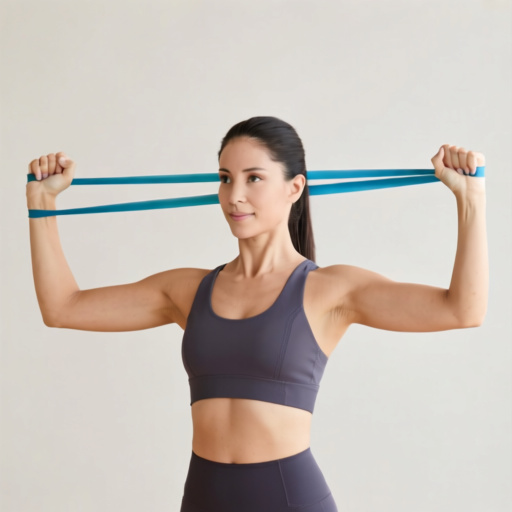
Resistance band arm workouts offer a versatile and effective way to build strength, tone muscles, and improve endurance. Integrating them with Pilates principles enhances core engagement, stability, and controlled movements. This section provides sample workout routines tailored to different fitness levels, guiding individuals from beginners to more advanced practitioners. Understanding the proper form and selecting the appropriate resistance band are key to maximizing results and preventing injury.
Beginner Arm Workout (Focus: Foundations & Light Resistance)
This routine focuses on building a foundational level of strength and proper form. It utilizes light resistance bands and emphasizes controlled movements. Perform each exercise for the recommended repetitions, resting for 30-60 seconds between sets. Aim for 2-3 sets per exercise.
- Band Pull-Aparts: Stand with feet shoulder-width apart, holding a light resistance band with arms extended in front of you. Slowly pull the band apart, squeezing your shoulder blades together. Return to the starting position with control. (10-12 repetitions)
- Bicep Curls: Stand on the center of a resistance band, holding the ends with palms facing up. Slowly curl the hands towards your shoulders, keeping elbows close to your body. Lower slowly. (10-12 repetitions)
- Triceps Extensions: Hold a resistance band overhead with both hands. Keeping your elbows close to your head, slowly extend your arms upwards. Lower slowly. (10-12 repetitions)
- Lateral Raises: Stand on a resistance band, holding the ends with palms facing your body. Slowly raise your arms out to the sides, keeping a slight bend in your elbows, until they are parallel to the floor. Lower slowly. (10-12 repetitions)
- Front Raises: Similar to lateral raises, but raise your arms straight out in front of you. (10-12 repetitions)
Intermediate Arm Workout (Focus: Increased Resistance & Compound Movements)
This routine introduces moderate resistance bands and incorporates more challenging exercises. It builds upon the foundational strength and endurance developed in the beginner routine. Maintain a controlled pace throughout each exercise. Aim for 3 sets of 12-15 repetitions.
- Bicep Curls with Feet Anchored: Stand on the center of a resistance band, securing it around your feet. Perform bicep curls, focusing on a full range of motion.
- Triceps Kickbacks: Lean forward from the hips, keeping your back straight. Hold a resistance band in one hand, with the other hand supporting your balance. Extend your arm straight back, squeezing your triceps. Return to the starting position. (12-15 repetitions per arm)
- Overhead Press: Stand on a resistance band, holding the ends with palms facing forward. Slowly press your arms overhead, extending them fully. Lower slowly.
- Rows: Secure the middle of a resistance band around a stable object at chest height. Hold the ends of the band, palms facing forward. Pull the band towards your chest, squeezing your shoulder blades together. Slowly release.
- Hammer Curls: Similar to bicep curls, but hold the hands with palms facing each other throughout the movement.
Advanced Arm Workout (Focus: High Resistance & Complex Exercises)
This routine utilizes heavier resistance bands and focuses on more demanding exercises to maximize strength and muscle definition. Proper form is crucial to avoid injury. Perform 3-4 sets of 10-12 repetitions.
- Close-Grip Push-ups with Band Resistance: Place a resistance band across your upper back, holding the ends with your hands. Perform close-grip push-ups, maintaining a straight line from head to heels.
- Reverse Flyes: Stand on a resistance band, holding the ends with palms facing each other. Keeping a slight bend in your elbows, pull the band apart, squeezing your shoulder blades together.
- Band Chest Press: Secure the resistance band behind your back, holding the ends with your hands. Push your hands forward, extending your arms.
- Triceps Extensions with Band and Knee Elevation: Secure the middle of a resistance band under your feet. Hold the ends of the band overhead, bending at the knees to increase resistance. Extend your arms overhead.
- Dynamic Band Rotations: Stand with feet shoulder-width apart, holding a light resistance band. Rotate your arms in small, controlled circles, alternating directions. This improves shoulder mobility and stability.
Important Considerations
Before beginning any new workout routine, it’s advisable to consult with a healthcare professional, especially if you have pre-existing conditions. Ensure the resistance band is in good condition and choose a level that challenges you without compromising form. Pay attention to your body and stop if you feel any pain. Proper breathing techniques are also essential; exhale during the exertion phase of each exercise and inhale during the release. Resistance band workouts can be incorporated into a general Pilates routine or performed as a standalone strength training session.
Common Mistakes to Avoid in Pilates Resistance Band Arm Workouts and How to Fix Them
Pilates resistance band arm exercises offer a fantastic way to sculpt and tone the arms, shoulders, and back. However, improper form can limit effectiveness and even lead to injury. This section addresses common pitfalls beginners and experienced practitioners alike encounter and provides actionable solutions. Understanding these common mistakes is the first step towards maximizing results and ensuring a safe workout.
One frequent error is using excessive momentum. Many individuals rely on swinging their arms or using body weight to pull the band through the motion, rather than engaging the targeted muscles. This reduces the resistance and diminishes the workout’s efficacy. Instead, focus on controlled, deliberate movements. Think of the band as providing resistance throughout the entire range of motion. For instance, in a bicep curl with a resistance band, the movement should originate from the elbow joint, with a slight bend and controlled contraction of the biceps. Avoid jerking or letting the band pull your arm into the movement.
Another common mistake involves neglecting core engagement. A strong core acts as a stabilizer, preventing unnecessary movement in the torso and ensuring that the arm muscles are doing the primary work. When the core isn’t engaged, the movement becomes less efficient and can strain the lower back. To correct this, consciously draw your navel towards your spine at the start of each exercise and maintain that engagement throughout. Imagine you are bracing for a gentle punch. This subtle activation will provide the stability needed for proper form.
Incorrect band placement is also a frequent issue. The band should be positioned correctly to provide optimal resistance. For exercises like lateral raises, ensuring the band is secured under both feet and held with a firm grip is crucial. If the band is too loose, the resistance won’t be challenging enough. Conversely, if it’s too tight, it can lead to hyperextension at the elbow joint. Experiment with different anchor points and band tensions to find what feels challenging yet controlled.
Furthermore, many people fail to maintain a consistent pace. Rushing through the exercises diminishes the time under tension, a key factor in muscle growth and endurance. Aim for slow, controlled movements, focusing on the feeling of the muscles working. A good rule of thumb is to count 2-3 seconds for the concentric (lifting) phase and 2-3 seconds for the eccentric (lowering) phase. This deliberate tempo maximizes muscle engagement.
Here’s a quick checklist to avoid these mistakes:
- Control the movement: Avoid momentum.
- Engage your core: Stabilize your torso.
- Secure band placement: Ensure proper tension.
- Maintain a slow, controlled pace: Focus on time under tension.
- Listen to your body: Stop if you feel any pain.
Addressing these common errors will significantly enhance the effectiveness of resistance band arm workouts. By focusing on proper technique, individuals can achieve better results and minimize the risk of injury. With consistent practice and attention to form, participants can effectively build strength and definition in their arms.
Maximizing Your Results: Integrating Pilates Resistance Bands into a Comprehensive Fitness Program
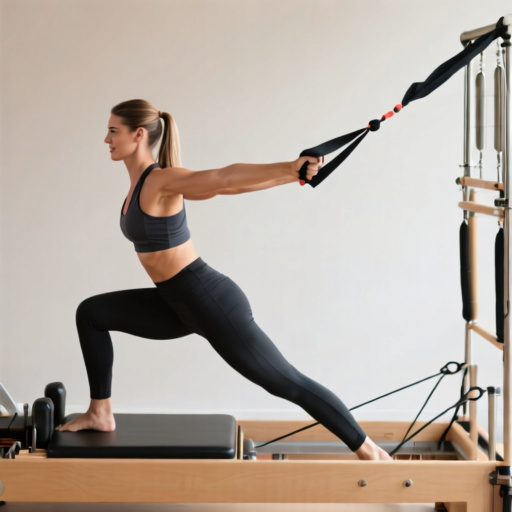
Resistance bands offer a versatile and effective way to enhance arm strength within a broader Pilates routine. Integrating these tools strategically can elevate both the intensity and variety of Pilates exercises, leading to more comprehensive results. Beyond the foundational movements, resistance bands provide progressive overload, allowing individuals to continually challenge their muscles as they gain strength. This section explores how to effectively incorporate resistance bands to maximize the benefits of a Pilates program for arm development.
Understanding the Synergy: Pilates and Resistance Bands
Pilates emphasizes core strength, controlled movements, and precise alignment. Resistance bands complement these principles by introducing external resistance, forcing muscles to work harder throughout the range of motion. This combination delivers a more holistic workout, improving not only arm strength but also stability and endurance. The low-impact nature of Pilates paired with the adjustable resistance of bands makes it suitable for individuals of various fitness levels and helps minimize stress on joints.
Strategic Integration: When and How to Use Bands
Resistance bands can be incorporated into numerous Pilates exercises. Consider these applications:
- Modified Push-Ups: Loop a resistance band around the upper back and hold the ends in your hands, performing a modified push-up. This variation increases the challenge to the chest, shoulders, and triceps.
- Bicep Curls: Perform bicep curls while standing on the center of a resistance band. The band provides constant tension throughout the movement.
- Triceps Extensions: Anchor a resistance band overhead and pull down in a triceps extension. This isolates the triceps muscles effectively.
- Lateral Raises: Holding the ends of a resistance band, perform lateral raises to target the medial deltoids (side shoulders).
- Scapular Retractions: Loop a resistance band around the torso and gently pull the ends apart, focusing on squeezing the shoulder blades together. This strengthens the muscles that stabilize the shoulder joint.
These are just a few examples. The key is to think about exercises where added resistance can be beneficial and to choose a band with appropriate tension. Lighter bands are suitable for beginners or warm-up exercises, while heavier bands offer a greater challenge for more advanced individuals.
Progressive Overload with Resistance Bands
A cornerstone of strength training is progressive overload – gradually increasing the demands placed on the muscles. Resistance bands facilitate this process effectively. As arm strength improves, individuals can progress to heavier resistance bands or increase the number of repetitions. This continuous challenge is crucial for sustained muscle growth and strength gains. For instance, someone initially performing 10 bicep curls with a light band could progress to 12 repetitions with a medium band, and eventually to 15 repetitions with a heavier band.
Ensuring Proper Form and Safety
While resistance bands are safe when used correctly, proper form is essential to prevent injuries. Always ensure the band is securely anchored or held and that the movements are controlled throughout the exercise. Avoid snapping the band, as this can lead to strains. Listen to your body and stop if you experience any pain. It’s also important to choose bands appropriate for your strength level and to start with lighter resistances before progressing.
Beyond Arm Strength: Holistic Benefits
Integrating resistance bands into Pilates isn’t solely about building arm strength. The added resistance engages stabilizing muscles throughout the entire body, promoting improved posture and balance. This contributes to a more well-rounded fitness program and can translate to enhanced performance in other physical activities. Furthermore, the increased muscle activation can contribute to improved metabolic function.
Practical Tips for Implementation
- Begin with lighter resistance bands to familiarize yourself with the exercises.
- Focus on maintaining proper Pilates form throughout each exercise.
- Gradually increase the resistance as strength improves.
- Incorporate band exercises into your existing Pilates routine 2-3 times per week.
- Consider using a variety of band colors or resistances to allow for progressive overload.
By strategically integrating Pilates resistance bands, individuals can significantly enhance their arm strength and overall fitness, unlocking a more comprehensive and effective workout experience.
Frequently Asked Questions
- What are the benefits of using resistance bands in Pilates?
Resistance bands offer a portable and cost-effective way to increase exercise intensity. They provide variable resistance, challenging muscles throughout the range of motion, leading to improved muscle activation and strength gains.
- What are the different types of resistance bands used in Pilates?
There are loop bands (mini bands), longer TheraBand-style bands, and handle bands. Each type serves different purposes and exercise variations.
- How do I choose the right resistance level for me?
Start with a lighter resistance band and gradually increase the level as you get stronger. TheraBand bands often have numbered resistance levels to guide you.

0 Comments