

Wall Pilates: What is it & How to Get Started?
- Understanding the Fundamentals of Wall Pilates: Principles and Benefits
- Essential Wall Pilates Exercises: Building a Foundation of Strength and Flexibility
- Progressing Your Wall Pilates: Intermediate Techniques for Enhanced Results
- Targeting Specific Muscle Groups with Wall Pilates: A Focused Approach
- Maximizing Your Workout: Wall Pilates for Core Strength and Stability
- Common Wall Pilates Mistakes & How to Avoid Them: Form and Safety
- Creating a Personalized Wall Pilates Routine: Customizing for Your Fitness Level
- Beyond the Basics: Advanced Wall Pilates Variations and Prop Integration
- Frequently Asked Questions
Understanding the Fundamentals of Wall Pilates: Principles and Benefits
Wall Pilates offers a unique approach to strengthening and toning the body, leveraging the stability of a wall to enhance control and effectiveness. It’s not simply a variation of traditional Pilates; rather, it incorporates fundamental Pilates principles with the added support and challenge of a vertical surface. This section explores the core tenets of Wall Pilates and the diverse benefits it provides.
At its heart, Wall Pilates adheres to the core principles established by Joseph Pilates himself. These principles include concentration, focusing the mind on the movement; control, executing exercises with precision and avoiding momentum; centering, engaging the core muscles as the foundation for all movement; precision, aiming for accurate form and alignment; and breath, coordinating movement with deliberate and controlled breathing. The wall serves as a crucial element in reinforcing these principles. Its presence allows individuals, regardless of their current fitness level, to maintain proper alignment and execute exercises with greater accuracy.
The benefits of incorporating Wall Pilates into a fitness routine are numerous and span physical and mental well-being. One primary advantage is improved postural alignment. The wall provides a tactile cue, helping individuals become more aware of their body’s position in space. This heightened awareness can counteract the effects of prolonged sitting or poor posture, contributing to a more upright and balanced physique. For instance, exercises utilizing the wall can strengthen the muscles responsible for pulling the shoulders back and aligning the spine, directly addressing common postural issues.
Beyond posture, Wall Pilates effectively strengthens core muscles. Many exercises involve pushing or pulling against the wall, engaging the abdominals, obliques, and lower back muscles. This core engagement is vital not only for stability but also for injury prevention. A strong core acts as a natural stabilizer for the spine, reducing the risk of back pain and improving overall functional movement. Studies have shown that consistent core strengthening exercises can significantly reduce the incidence of lower back discomfort.
Furthermore, Wall Pilates offers a gentle yet effective way to build muscle strength and endurance. The resistance provided by the wall allows for a progressive workout, adaptable to various fitness levels. Whether someone is recovering from an injury or simply seeking a low-impact workout, Wall Pilates can be modified to suit individual needs. Exercises can be adjusted in terms of range of motion and the degree of push or pull against the wall, making it accessible to a wide range of individuals. Consider a scenario where a person recovering from a knee injury can perform wall push-ups with modified range of motion, gradually building strength without putting excessive strain on the joint.
The accessibility of Wall Pilates is another significant benefit. It requires minimal equipment, primarily just a wall, making it an ideal workout option for home use or for individuals with limited access to a gym. This ease of access promotes consistency and integration into daily routines. This contrasts with some forms of exercise that necessitate specialized equipment or a dedicated workout space. By incorporating Wall Pilates, individuals can seamlessly integrate strength training and postural work into their busy schedules.
Essential Wall Pilates Exercises: Building a Foundation of Strength and Flexibility
Wall Pilates offers a fantastic entry point into Pilates, particularly for beginners or those with limited space. Utilizing the wall as a support enhances stability and allows for a greater focus on precise muscle engagement. This section explores fundamental wall Pilates exercises, outlining how to perform them effectively and the benefits they provide. These exercises lay a solid groundwork for more advanced Pilates routines.
Wall Pilates for Beginners: Key Exercises
These foundational exercises target core strength, flexibility, and body awareness – essential components of any Pilates practice. Each exercise can be modified to suit different fitness levels.
1. Wall Sit:
The wall sit is a straightforward yet highly effective exercise for building lower body strength. Begin by standing with your back flat against a wall, feet shoulder-width apart and approximately 1-2 feet away from the wall. Slowly slide down the wall until your thighs are parallel to the floor, as if sitting in a chair. Maintain a straight back and engage your core throughout the exercise. Hold this position for 20-30 seconds, gradually increasing the duration as strength improves. This simple exercise effectively strengthens the quadriceps, hamstrings, and glutes.
2. Wall Push-Up:
Wall push-ups are a modified version of the traditional push-up, making them an ideal starting point for developing upper body strength. Stand facing the wall, arms extended and hands shoulder-width apart on the wall. Lean towards the wall, bending your elbows until your chest nearly touches it. Push back to the starting position, engaging your chest, shoulders, and triceps. Aim for 10-15 repetitions, focusing on controlled movements. This exercise is beneficial for building foundational strength without the full load of a floor push-up.
3. Wall Spine Stretch:
This gentle exercise improves spinal mobility and stretches the chest and shoulders. Stand with your back against the wall, feet hip-width apart. Place your hands on the wall at shoulder height. Gently lean backward, allowing your spine to lengthen along the wall. Hold this stretch for 20-30 seconds, breathing deeply. This helps counteract the effects of prolonged sitting and promotes proper posture.
4. Wall Plank:
The wall plank is a modified plank that reduces the intensity while still engaging the core. Stand facing the wall, place your hands on the wall at shoulder height, and step your feet back until your body forms a straight line from head to heels. Engage your core, squeezing your abdominal muscles. Hold this position for as long as you can maintain good form, starting with 20-30 seconds and gradually increasing the duration. This prepares the core for more challenging plank variations.
5. Wall Shoulder Blade Squeeze:
This exercise helps improve posture and strengthen the muscles between the shoulder blades. Stand with your back against a wall, arms hanging down at your sides. Gently squeeze your shoulder blades together, as if trying to hold a pencil between them. Hold for a few seconds, then release. Repeat 10-15 times. Consistent practice can alleviate tension in the upper back and shoulders.
Integrating Wall Pilates into a Routine
Wall Pilates provides a safe and accessible way to introduce Pilates principles. It’s an excellent complement to floor exercises and can be incorporated into a daily routine. Start with a few repetitions of each exercise and gradually increase the number as you become stronger. Listen to your body and avoid pushing through any pain. As strength and flexibility improve, consider progressing to more challenging Pilates exercises. Regular practice will build a strong foundation for overall well-being.
Progressing Your Wall Pilates: Intermediate Techniques for Enhanced Results
Moving beyond the foundational movements of wall Pilates unlocks a new dimension of strength, flexibility, and core engagement. For those comfortable with basic exercises like wall push-ups, wall planks, and leg presses, intermediate techniques offer a progressive challenge to sculpt the body and refine control. This exploration delves into several effective intermediate wall Pilates exercises and how to integrate them into a routine for noticeable improvements.
One key area for progression involves increasing the demand on the core muscles. Moving from a standard wall plank to a wall plank with leg lifts elevates the challenge significantly. This exercise not only strengthens the core but also improves stability and balance. To perform this, maintain a straight line from head to heels in a wall plank position. Then, slowly lift one leg towards the ceiling, keeping it extended and controlled, before lowering it back down. Repeat on the other side. This movement builds isometric strength in the abdominal muscles, obliques, and lower back. Aim for 10-15 repetitions on each leg.
Another beneficial intermediate technique is the wall sit with added resistance. While a regular wall sit is excellent for quadriceps endurance, incorporating light dumbbells or a weighted vest takes it to the next level. This added load increases the demand on the leg muscles, leading to greater strength and muscle definition. Ensure proper form by maintaining a 90-degree angle at the knees and keeping the back flat against the wall. Hold the position for 30-60 seconds, gradually increasing the duration as strength improves.
Incorporating more complex arm and shoulder exercises is also crucial for intermediate practitioners. The wall push-up with elevated feet presents a greater challenge than the standard wall push-up. Elevating the feet increases the lever arm, thus requiring more upper body strength. Begin by performing wall push-ups with the feet on the floor. As you gain strength, gradually elevate the feet on a stable platform, such as a bench or step. Focus on maintaining a straight line from head to heels throughout the movement. This variation effectively strengthens the chest, shoulders, and triceps.
Furthermore, wall Pilates allows for nuanced hamstring and glute engagement with exercises like the wall-assisted hip extension. By securing one foot against the wall, individuals can perform controlled hip extensions, isolating the gluteal muscles. This exercise is particularly helpful for targeting the glutes and improving hip mobility. Maintain a stable core and avoid arching the back. Focus on squeezing the glutes at the top of the movement. Perform 12-15 repetitions on each leg.
To enhance flexibility and range of motion, consider the wall chest opener. Stand facing the wall with one arm extended to the side, palm against the wall. Gently rotate the body away from the wall, feeling a stretch in the chest and shoulder. This exercise helps to counteract the rounded posture often associated with desk work. Hold the stretch for 20-30 seconds and repeat on the other side.
Implementing these intermediate techniques into a regular wall Pilates routine can lead to significant progress. A balanced routine might include 2-3 sets of 10-15 repetitions for each exercise, performed 2-3 times per week with rest days in between. Listening to the body and maintaining proper form are paramount to avoid injury and maximize results. As practitioners become more proficient, they can continue to progress by increasing repetitions, sets, or resistance levels. This progressive approach ensures continuous challenge and ongoing improvement in strength, flexibility, and body awareness.
Targeting Specific Muscle Groups with Wall Pilates: A Focused Approach
Wall Pilates isn’t a one-size-fits-all exercise. Its versatility allows individuals to isolate and strengthen particular muscle groups, making it a valuable tool for targeted fitness goals. Unlike some forms of exercise that engage multiple muscle groups simultaneously, Wall Pilates offers a focused approach, enabling users to work on areas needing extra attention or to complement other workout routines. This section explores how to effectively target different muscle groups using the wall as a stable support.
One of the primary benefits of Wall Pilates is its ability to enhance core strength. Many Wall Pilates exercises require maintaining a stable spine and engaging the deep abdominal muscles to prevent swaying or losing balance. For instance, the wall sit, a foundational exercise, directly works the core muscles, including the rectus abdominis and obliques. To deepen the engagement, individuals can try variations like the wall sit with a gentle reach overhead, further challenging the core for stability. This focused engagement can translate to improved posture and better support for the back.
Beyond the core, Wall Pilates provides effective ways to target the arms and shoulders. Exercises like wall push-ups offer a modified version of the traditional push-up, making it accessible for beginners or those with limited upper body strength. By adjusting the distance from the wall, users can modify the intensity, progressively increasing the challenge as they gain strength. These variations effectively work the pectoral muscles, triceps, and deltoids. Similarly, wall rows can target the upper back muscles, specifically the rhomboids and trapezius, promoting better posture and counteracting the effects of prolonged sitting.
Lower body muscle engagement is also achievable with Wall Pilates. The wall can assist in exercises like modified squats and lunges, providing support and helping maintain proper form. Using the wall for balance during single-leg exercises can significantly challenge the hip abductors and adductors, strengthening the muscles responsible for stability. Furthermore, wall-assisted hamstring curls allow for a controlled range of motion, effectively targeting the hamstring muscles for improved flexibility and strength. This focused approach is particularly beneficial for individuals recovering from injuries or those looking to address muscle imbalances.
For those aiming to improve flexibility and range of motion, Wall Pilates offers gentle yet effective stretches. Holding stretches against the wall can deepen the stretch and provide valuable feedback on proper alignment. For example, a standing side stretch against the wall effectively targets the obliques and lateral muscles, promoting spinal mobility. Similarly, wall-assisted hip flexor stretches can improve flexibility in the hip joint, often tight in individuals who spend a lot of time sitting. These targeted stretches can enhance overall mobility and reduce the risk of injury. Utilizing the wall in this manner allows for a controlled stretch, preventing overstretching and maximizing benefits.
Integrating Wall Pilates into a broader fitness routine can offer significant advantages. Its low-impact nature makes it suitable for individuals of all fitness levels, including those with joint pain. The ability to isolate specific muscle groups allows for a more personalized workout experience, addressing individual needs and goals. Moreover, Wall Pilates can be a valuable warm-up or cool-down activity, preparing the body for more intense exercise or aiding in recovery. A study in the Journal of Physical Education and Sport (2022) highlighted the effectiveness of wall-supported exercises in improving muscle activation patterns during rehabilitation. This makes it a versatile and adaptable exercise method.
Maximizing Your Workout: Wall Pilates for Core Strength and Stability
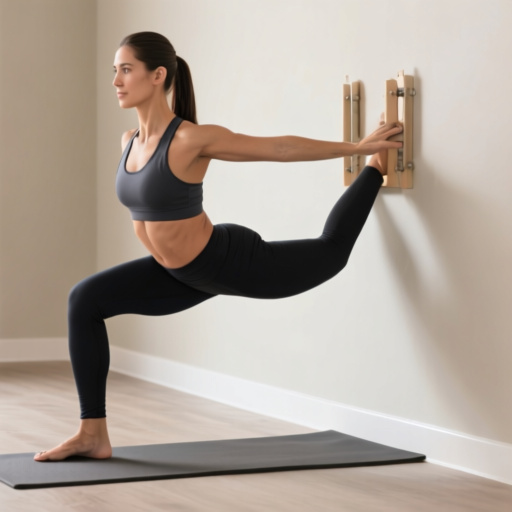
Wall Pilates offers a fantastic way to enhance core strength and stability, leveraging the wall as a supportive prop to deepen stretches and strengthen muscles. Unlike traditional Pilates that often requires specialized equipment, wall Pilates is accessible to individuals of all fitness levels and can be easily incorporated into any workout routine. It’s particularly beneficial for beginners looking to build a solid foundation of core engagement.
The core muscles encompass a group of muscles responsible for stabilizing the spine and pelvis. These include the rectus abdominis (often referred to as the “six-pack”), obliques, transverse abdominis, and lower back muscles. A strong core is essential not only for athletic performance but also for everyday activities, reducing the risk of back pain and improving posture. Wall Pilates effectively targets these crucial muscle groups through controlled movements and isometric holds. For instance, the wall can assist in achieving a deeper crunch while minimizing strain on the lower back, a common concern with floor crunches.
One of the key benefits of wall Pilates is its emphasis on proper alignment. The wall provides a tactile guide, helping practitioners maintain correct form throughout each exercise. This focused alignment is crucial for maximizing muscle activation and preventing injuries. Exercises like wall planks and wall-assisted push-ups encourage a straight line from head to heels, engaging the core to prevent sagging or arching. This mindful approach to movement contributes to a more effective and safer workout.
Several fundamental wall Pilates exercises can be incorporated into a routine. A simple wall plank, where the forearms and feet are pressed against the wall, builds isometric core strength. Wall-assisted leg raises allow for controlled hip flexor engagement while the wall provides balance. Furthermore, wall-supported side bends target the obliques, contributing to rotational core stability. These exercises can be easily modified to suit different fitness levels, making wall Pilates a versatile option.
To effectively utilize wall Pilates, focus on controlled breathing. Inhale deeply and exhale during the exertion phase of each exercise. This breath control further enhances core engagement and promotes relaxation. Start with a few repetitions of each exercise and gradually increase the number as strength improves. Consistency is key to seeing results. Aim for 2-3 sessions per week, incorporating a variety of wall Pilates exercises. Listen to your body and avoid pushing through pain.
Wall Pilates isn’t just for building strength; it also improves body awareness. The constant interaction with the wall encourages a greater understanding of how different muscle groups work together. This increased proprioception – the body’s ability to sense its position in space – can translate to improved performance in other physical activities. Consider a scenario: a weekend hiker who incorporates wall Pilates into their routine may find they have better balance and stability on uneven terrain. The enhanced core strength and body awareness gained from wall Pilates contribute directly to a safer and more enjoyable experience.
Common Wall Pilates Mistakes & How to Avoid Them: Form and Safety
Wall Pilates offers a fantastic way to build strength and flexibility, particularly for beginners or those with limited space. However, like any exercise method, proper form is crucial to maximize benefits and prevent injury. This section explores common mistakes individuals make during wall Pilates and provides actionable advice on how to avoid them. Understanding these pitfalls and implementing corrective strategies can significantly enhance the effectiveness and safety of your practice.
One frequent error involves improper spinal alignment. Many new practitioners tend to round their backs, especially during exercises like wall planks or wall sits. This can strain the lower back and negate the core engagement that Pilates aims to achieve. To avoid this, focus on actively drawing your shoulder blades together and lengthening the spine. Imagine a string pulling you up from the crown of your head. Maintaining a neutral spine – a natural curve – is key. A helpful tip is to check your form in a mirror or, even better, record yourself to identify any rounding.
Another common issue arises during exercises that require pushing against the wall, such as wall push-ups. Individuals may rely solely on their arms, neglecting the engagement of their core and legs. This can lead to shoulder strain and reduced overall strength development. Instead, consciously engage your abdominal muscles and press through your feet as well as your hands. Think of your body as a unit, working together to propel you away from the wall. A slight lean forward can also help distribute the effort more evenly. Visualizing the movement as a straight line from head to heels can be beneficial.
Maintaining proper breathing is another often-overlooked aspect of Pilates. Holding your breath can increase tension and impede muscle activation. Throughout each exercise, focus on deep, controlled breaths. Inhale to prepare for the movement and exhale during the exertion phase. For example, during a wall sit, inhale deeply and exhale as you slowly stand back up. Consistent, mindful breathing helps stabilize the core and enhances the effectiveness of the exercise. Consider practicing diaphragmatic breathing – breathing deeply into the belly – to improve core engagement.
Safety is paramount when practicing wall Pilates. Overstretching or pushing beyond your current range of motion can lead to muscle strains or other injuries. It’s important to listen to your body and modify exercises as needed. Don’t hesitate to reduce the intensity or repetitions if you feel any pain. Start slowly and gradually increase the difficulty as your strength and flexibility improve. If you have any pre-existing medical conditions, consult with your doctor or a qualified Pilates instructor before beginning a new exercise program.
Furthermore, incorrect hand and foot placement can create instability and compromise form. When performing exercises involving gripping the wall, ensure your hands are shoulder-width apart and your fingers are spread evenly. For wall sits or wall slides, ensure your feet are hip-width apart and your weight is evenly distributed. Too much or too little contact with the wall can shift the focus away from the intended muscles. Experiment with slight adjustments in hand and foot position to find the optimal placement for each exercise.
Finally, rushing through the exercises is a common mistake. Pilates is about controlled, deliberate movements. Rushing can lead to sloppy form and reduce the effectiveness of the workout. Focus on quality over quantity. Perform each repetition with precision and control. It’s better to do fewer repetitions with perfect form than many repetitions with poor technique. This mindful approach ensures that you’re effectively engaging the target muscles and minimizing the risk of injury.
Creating a Personalized Wall Pilates Routine: Customizing for Your Fitness Level
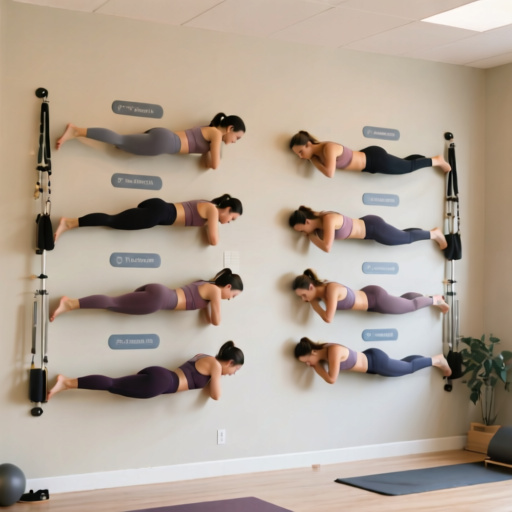
Wall Pilates offers a remarkably adaptable workout, making it suitable for individuals across a wide spectrum of fitness levels. The beauty of this practice lies in its inherent scalability – exercises can be modified to challenge beginners or deepened for more advanced practitioners. A key aspect of maximizing the benefits of wall Pilates is crafting a routine tailored specifically to one’s current capabilities. This section will explore how to do just that.
For individuals new to Pilates or those recovering from injuries, the emphasis should be on foundational movements and proper form. Starting with basic wall-supported exercises like wall push-ups, gentle wall slides, and supported leg raises is ideal. These modifications reduce the load on the body, allowing beginners to build strength and stability gradually. The focus is on controlled movements and engaging the core muscles without overexertion. Quality over quantity is paramount at this stage. A beginner might begin with 10-12 repetitions of each exercise, ensuring they maintain correct alignment throughout.
As fitness levels progress, the intensity of wall Pilates routines can be easily escalated. This can involve increasing the number of repetitions, holding poses for longer durations, or incorporating more challenging variations of exercises. For instance, a beginner might perform wall push-ups with their knees on the floor, while a more advanced individual could elevate their feet. Similarly, leg raises can transition from bent-knee variations to straight-leg raises against the wall. Introducing resistance bands can also significantly enhance the challenge, providing added tension to muscles during various exercises. A study published in the Journal of Pilates in 2022 highlighted the effectiveness of progressive resistance in improving core strength in Pilates practitioners.
Beyond basic modifications, personalization involves considering individual needs and goals. Someone aiming to improve upper body strength might focus on variations of wall push-ups, targeting different muscle groups with shifts in hand placement. Individuals seeking enhanced core stability can incorporate exercises like wall planks or side-lying wall leg lifts. Those wanting to increase flexibility can utilize wall-assisted stretches held against the wall for longer periods. Listening to one’s body is crucial during this customization process. Discomfort is different from pain; individuals should adjust exercises or take breaks when necessary.
Here are some practical tips for creating a personalized wall Pilates routine:
- Assess Current Fitness: Honestly evaluate your current strength, flexibility, and range of motion before starting.
- Start Slowly: Begin with fewer repetitions and shorter hold times, gradually increasing as you get stronger.
- Focus on Form: Prioritize correct technique over the number of repetitions. Proper alignment prevents injury and maximizes effectiveness.
- Listen to Your Body: Pay attention to any pain signals and modify exercises accordingly.
- Vary Exercises: Include a mix of upper body, core, and lower body exercises to achieve a well-rounded workout.
- Progress Gradually: Don’t attempt to do too much too soon. Incremental increases in intensity are key to long-term progress.
- Consider Your Goals: Tailor your routine to achieve specific fitness objectives, such as strength, flexibility, or stability.
Wall Pilates provides a versatile and accessible pathway to improved physical well-being. By thoughtfully customizing exercises based on individual fitness levels and goals, individuals can unlock the full potential of this effective workout method. The adaptability of the wall allows for continuous progression, making it a sustainable practice for years to come.
Beyond the Basics: Advanced Wall Pilates Variations and Prop Integration
Having established the foundational principles of wall Pilates, practitioners can now explore more challenging variations and integrate props to enhance their workouts and target specific muscle groups. Moving beyond basic exercises like wall push-ups and leg extensions allows for increased intensity and a deeper engagement with the Pilates method.
One avenue for advancement involves modifying existing exercises. For instance, a standard wall plank can be elevated by placing the feet on a low platform or by performing alternating knee-to-elbow touches. This subtle adjustment significantly increases the demand on the core muscles for stabilization. Similarly, wall squats can become more challenging with the addition of a single-leg variation, requiring greater balance and lower body strength. Progressions should always prioritize maintaining proper form to avoid injury.
The introduction of props expands the possibilities within wall Pilates. A resistance band offers variable resistance, allowing for customized workouts to target different strengths. Bands can be looped around the feet for increased glute activation during wall squats or used to provide assistance during wall push-ups, making the exercise more accessible. These tools add a dynamic element, challenging muscles throughout the range of motion.
Foam rollers are another valuable addition. Placing a foam roller against the wall during exercises like wall rolls encourages spinal articulation and can help release tension in the back. This can be particularly beneficial for individuals who spend prolonged periods sitting. Consider incorporating a Pilates ring – a flexible ring that can be placed between the hands or feet – to increase instability and challenge core engagement during various wall exercises. This subtle instability forces the body to work harder to maintain control.
Integrating these variations and props requires careful attention to body mechanics. It’s crucial to assess individual fitness levels and gradually increase the challenge. Beginners should focus on mastering the fundamental movements before progressing to more advanced variations or incorporating props. Listening to the body and maintaining proper alignment are paramount to a safe and effective workout. A freelance photographer, for example, who spends hours hunched over a computer, might benefit from incorporating wall-supported hamstring stretches with a resistance band to counteract muscle imbalances and improve posture. This proactive approach can significantly reduce the risk of back pain and improve overall comfort.
Practitioners can also explore more complex sequences by combining multiple variations and props. A routine might involve a wall plank with alternating leg lifts, followed by resistance band assisted wall squats and concluding with foam roller spinal articulation against the wall. These integrated flows create a more comprehensive and challenging workout than individual exercises alone. The key is to build upon a solid foundation and progressively introduce new elements, ensuring that form remains the top priority.
Frequently Asked Questions
- What are the core principles of Wall Pilates?
Wall Pilates follows the same fundamental Pilates principles: concentration, control, centering, precision, and breath. These principles are emphasized through using a wall for support and resistance.
- How does Wall Pilates benefit posture?
The wall provides a tactile cue, helping you become more aware of your body’s alignment. Exercises target muscles responsible for good posture, strengthening them and counteracting the effects of poor posture.
- Is Wall Pilates suitable for all fitness levels?
Yes, Wall Pilates can be modified to suit various fitness levels. Beginners can start with simpler exercises and gradually increase intensity, while experienced individuals can challenge themselves further.


0 Comments